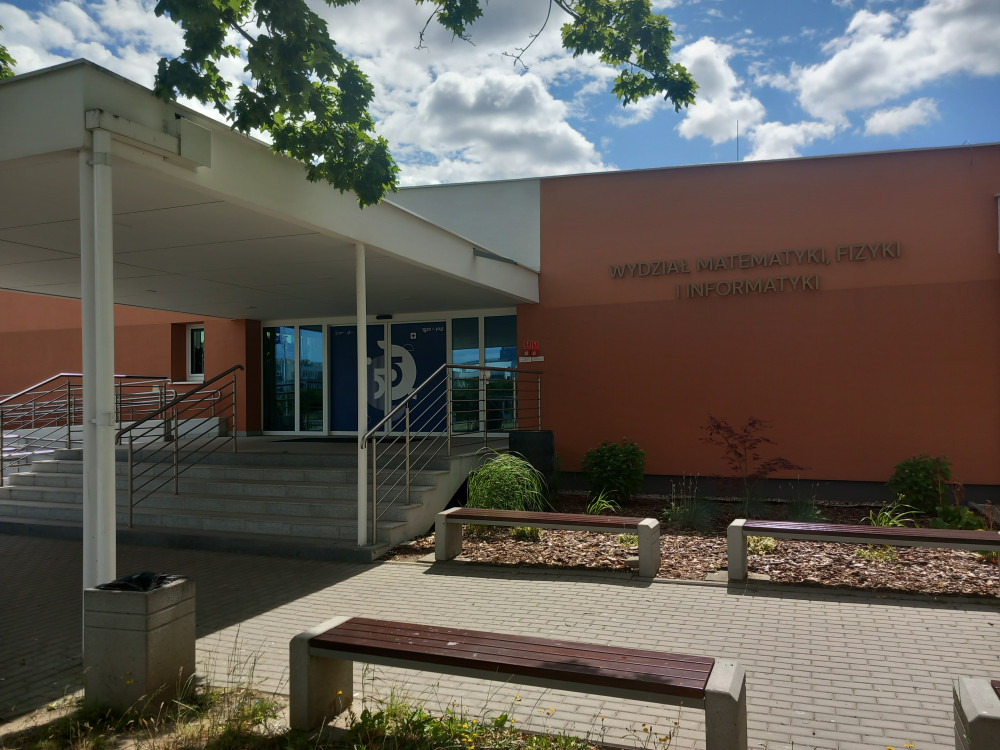
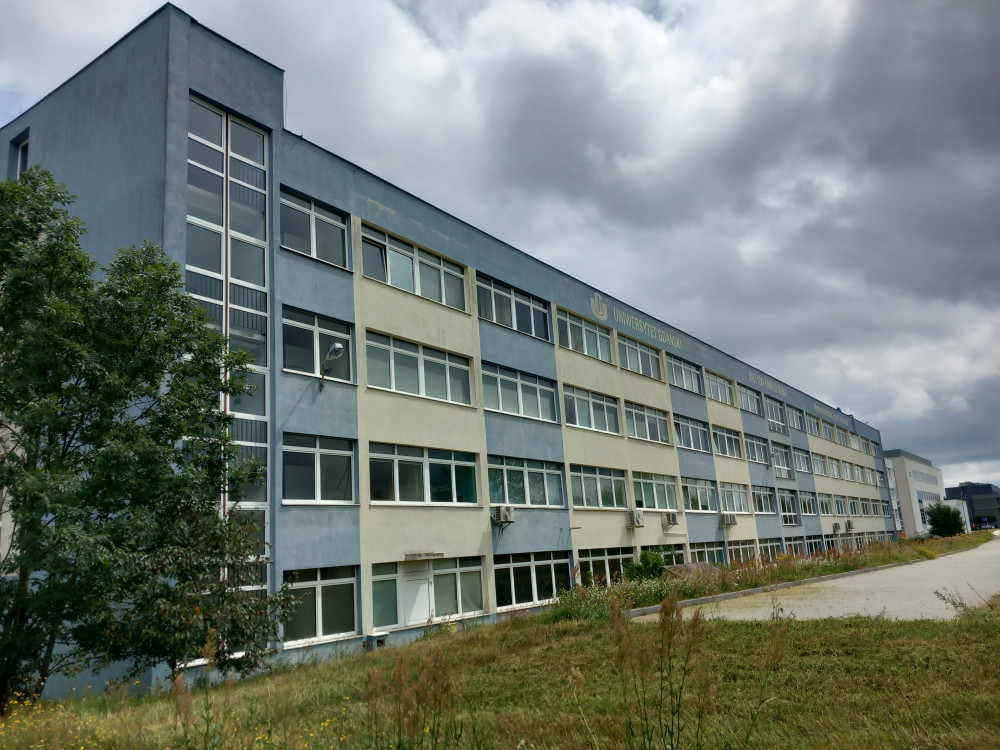
Faculty
About us
In its present form, the Faculty has existed since year 2003. Previously, in the years 1970-1991, it operated as the Faculty of Mathematics, Physics and Chemistry, and in the years 1991-2003 as the Faculty of Mathematics and Physics.
The Faculty consists of four institutes:
-
Institute of Mathematics
-
Institute of Experimental Physics
-
Institute of Theoretical Physics and Astrophysics
-
Institute of Informatics
The Faculty is authorized to award doctoral degrees (PhDs) in mathematics and physics, as well as postdoctoral degrees (habilitation) in the same disciplines. Below we present an overview of the research areas of each institute.
At the Institute of Mathematics, research activities concern, among others, topological methods in nonlinear analysis and singularity theory, partial functional differential equations, mathematical foundations of computer science, set-theoretic aspects of measure theory, topology and Boolean algebras, nonlinear boundary value problems for differential equations and inclusions, applications of set theory in real analysis, probability theory and its applications. The Institute cooperates with eight foreign research centers.
Research conducted at the Institute of Experimental Physics covers both fundamental problems of atomic, molecular and solid-state physics, as well as modern interdisciplinary studies in medical physics, biophysics, biomaterials, nanotechnology and environmental protection. A high level of research and teaching is ensured by laboratories equipped with state-of-the-art measurement apparatus. Effective cooperation is also maintained with many leading research groups worldwide.
Research at the Institute of Theoretical Physics and Astrophysics focuses primarily on quantum information science. Achievements in this field laid the foundations for the Gdańsk School of Quantum Information, widely recognized internationally. In 2007, the National Centre for Quantum Information was established within the structure of the University of Gdańsk, with its scientific base largely built upon the research achievements of the Institute. Since 2019, part of the Institute’s staff has joined the International Centre for Theory of Quantum Technologies (ICTQT), established thanks to funding obtained from the Foundation for Polish Science. In addition, research is conducted on atomic and molecular systems and their interaction with light, problems of statistical physics, mathematical foundations of quantum physics, and analysis of physical conditions in stellar atmospheres. The Institute’s ambition and constant concern is access to the most modern techniques used both for computations and for communication with approximately twenty foreign research centers.
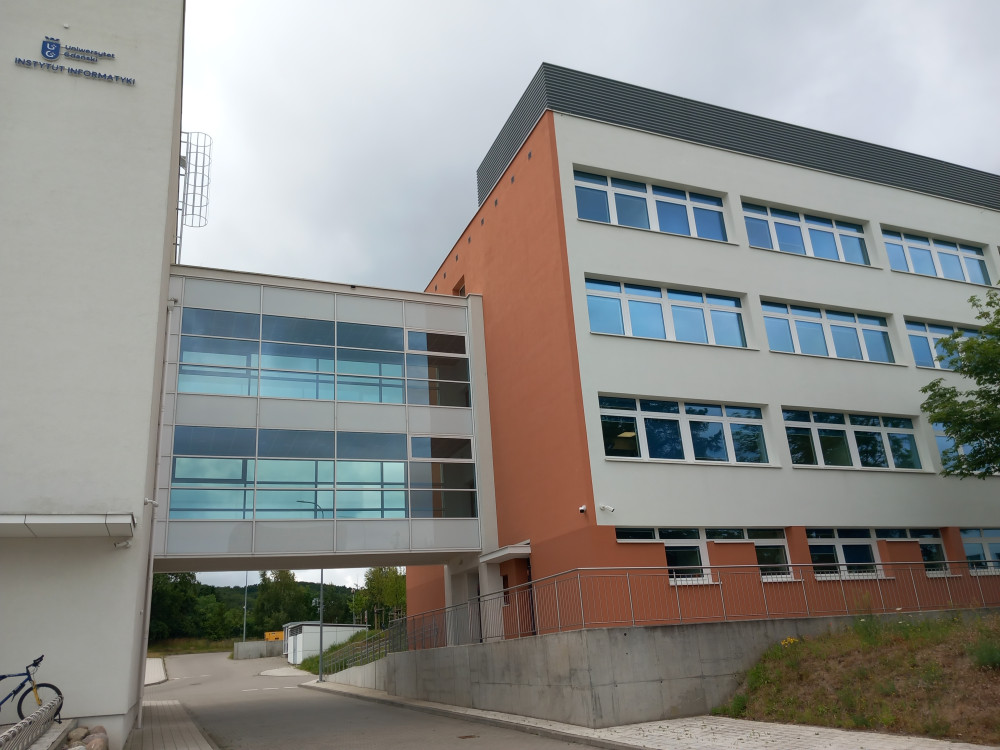
The Institute of Computer Science was established in 2007. Its core staff comes from the former Department of Computer Science within the Institute of Mathematics. Researchers at the Institute work in the areas of automata theory, mathematical linguistics, computational complexity, as well as artificial intelligence, parallel and distributed computing, design, organization and maintenance of mathematical libraries, combinatorial problems, graph theory, computational geometry, quantum information theory, multi-agent systems, analysis of internet resources, cellular automata and mathematical modeling. The Institute cooperates with numerous foreign research centers.
On the prestigious list of the top 2% of scientists worldwide, prepared by Stanford University in 2020, 14 researchers from the University of Gdańsk were included, as many as 7 of whom are affiliated with our Faculty:
-
Robert Alicki
-
the late Marek Grinberg
-
Michał Horodecki
-
Paweł Horodecki
-
Ryszard Horodecki
-
the late Alfons Kawski
-
Marek Żukowski
There are many more distinguished professors associated with the Faculty.
In terms of teaching, the Faculty offers first-cycle (Bachelor’s) and second-cycle (Master’s) degree programs in many fields related to the disciplines it represents. The Faculty also offers a program taught in English - Master’s degree program in Quantum Information Technology.
Moreover, the Faculty participates in the operation of the Doctoral School of Exact and Natural Sciences in the disciplines of physics and mathematics.
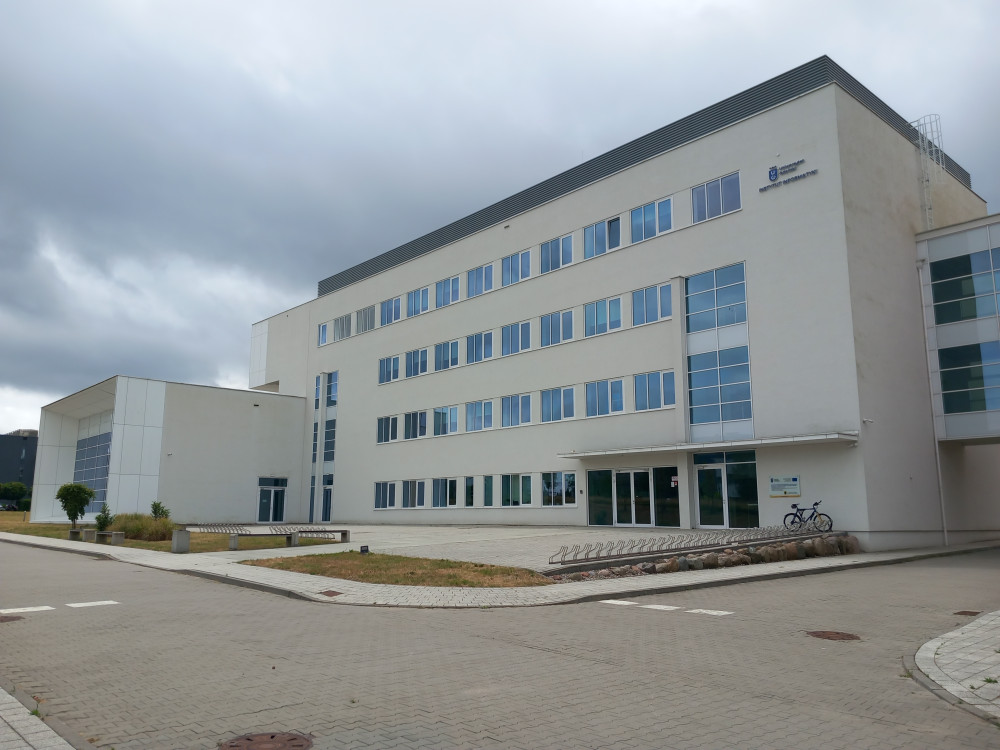
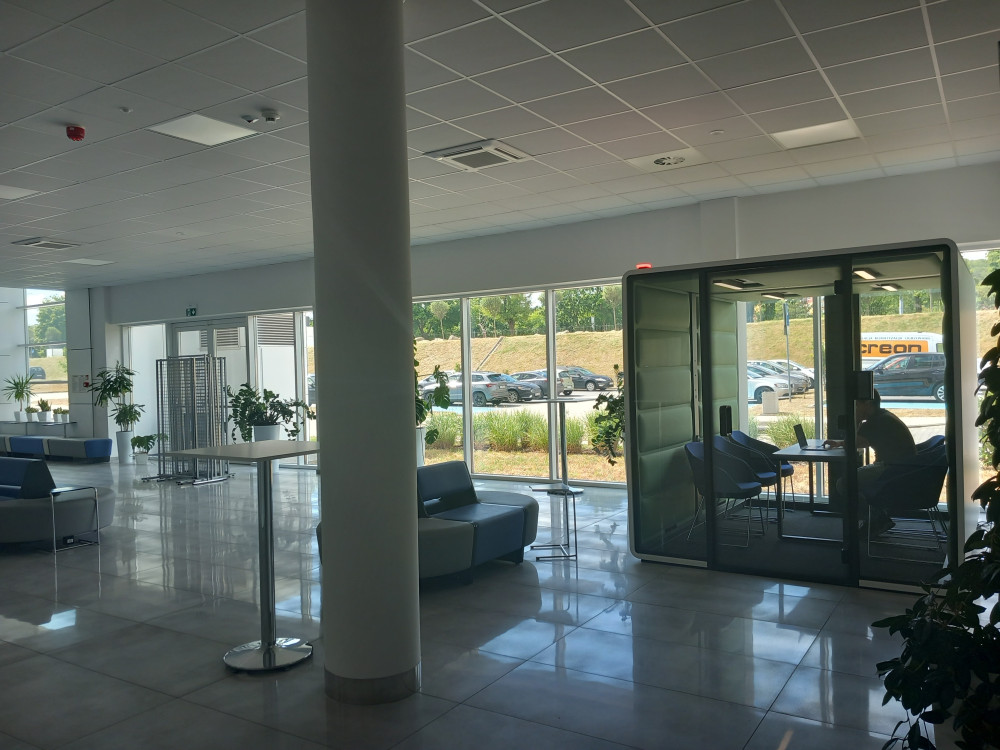
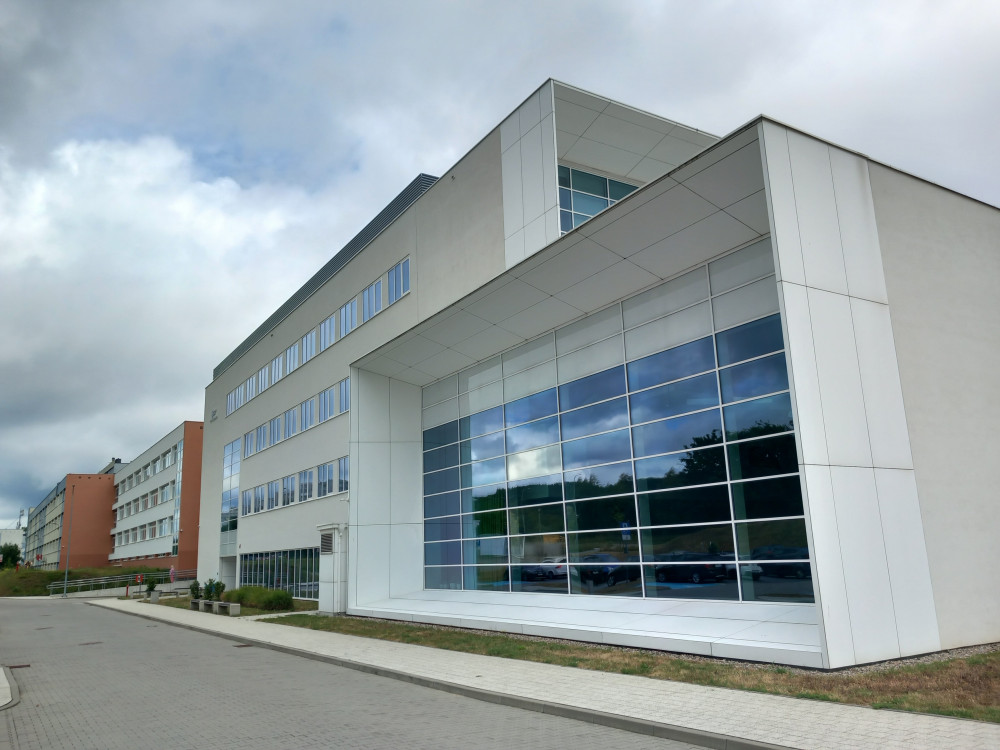
In the years 2009-2014, as a result of projects implemented under the Regional Operational Programme of the Pomeranian Voivodeship (Physics for the Future and Physics for Medicine), the Faculty significantly expanded and modernized its teaching laboratory facilities for physics-related programs. Since 2019, as a result of another Regional Operational Programme project, the Faculty’s infrastructure has been enriched with a new wing of the Institute of Computer Science building, containing a number of modern, well-equipped computer laboratories dedicated to education in the practically oriented computer science program.